The 600 W printed on a card's spec sheet is not the number you size a power supply around, and it is definitely not the number your breaker will see. We collected wall measurements for one, two and four card builds, worked out why an RTX PRO 6000 stops at 450 W instead of 600 inside a server, and ran the arithmetic for a 16 amp circuit of the kind found in Ukrainian offices.
In brief
- A single 600 W card in a Threadripper workstation peaked at 1,036.3 W at the wall
- Four Max-Q cards at 300 W each mean 1,650 to 1,760 W on the UPS under sustained load
- A 450 W cap instead of 600 in a server comes from the cable's sense configuration, not from a fault
- Cutting the limit from 600 W to 300 W costs 6% on generation and up to 48% on prompt processing
- An RTX 5090 transient hits 901 W in under a millisecond. The supply has to survive that
What the data sheet actually states
NVIDIA defines TGP as the maximum power a supply must be able to deliver to the card. It is a requirement on one rail, not the draw of the machine. Confusing those two numbers accounts for half the forum threads on the subject.
| Card | Board power | Connector |
|---|---|---|
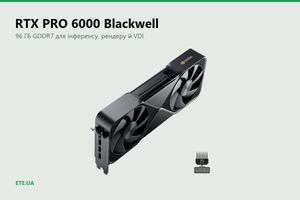
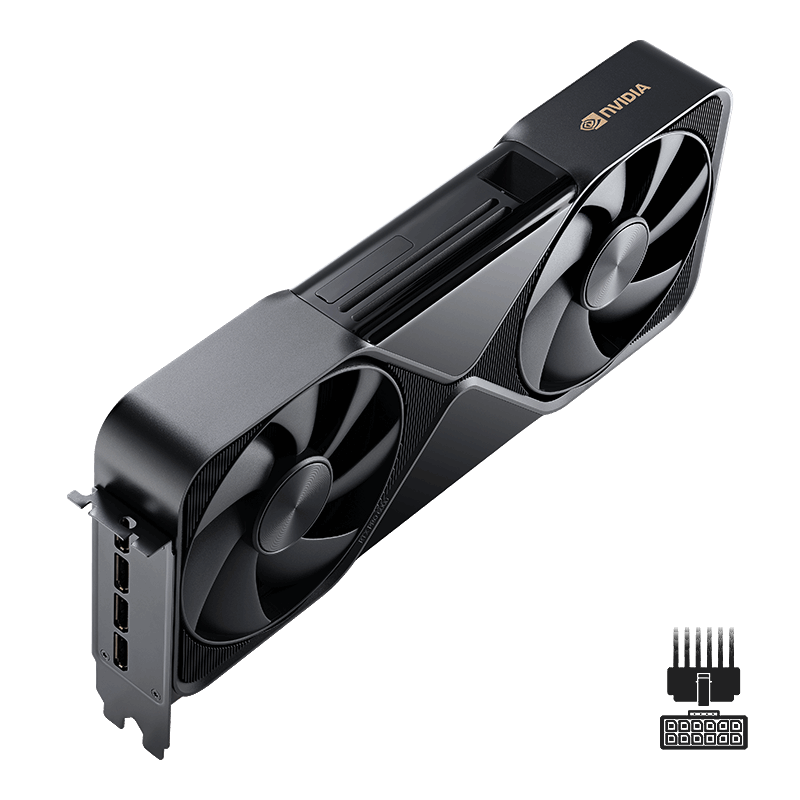
| RTX PRO 6000 Blackwell Workstation | 600 W | 1× PCIe CEM5 16-pin |
| RTX PRO 6000 Blackwell Max-Q | 300 W | 1× PCIe CEM5 16-pin |
| RTX PRO 6000 Server Edition | configurable, up to 600 W | platform cable |
| GeForce RTX 5090 | 575 W, 1000 W supply and up | 600W PCIe Gen5 |
Sources: NVIDIA data sheets, Power Guidelines DA-07261-001_v15, ServeTheHome. Sources disagree on the lower bound for the Server Edition: NVIDIA writes “up to 600 W, configurable”, ServeTheHome quotes 400 W, Lenovo 450 W.
What the machine pulls from the wall
Adding up data sheet figures gets you nowhere. On top of the cards sit a CPU at full load, memory, drives and the losses inside the supply. Everything below is measured.
| Configuration | Under load | Peak |
|---|---|---|
| 1× RTX PRO 6000 600 W, Threadripper 7980X | 918.5 W | 1,036.3 W |
| 4× Max-Q, two cards loaded | up to 1,200 W | none |
| 4× Max-Q 300 W, TR PRO 7985WX | 1,650 to 1,760 W | 1,950 W |
| 4× RTX 3090 in a desktop | 1,717 W, 14.3 A at 120 V | that is the maximum |
| 2× RTX 5090 and 2× RTX PRO 6000 | 3,000 to 3,200 W | owner's estimate |
Sources: StorageReview, Level1Techs, a 4× Max-Q build, Puget Systems, Level1Techs, powering a build in rented premises. We found no public measurement of four cards running at 600 W each.
The planning rule is simple. Multiply total card power by 1.5 and you have the draw of the machine under load.
Power supply: average draw decides nothing
Current cards live in short bursts. TechPowerUp recorded a 901 W spike on the RTX 5090 lasting under a millisecond, and that stays inside ATX 3.1, which requires a unit to tolerate up to 200% of its rating. A cheap supply trips its protection on excursions like these and drops the machine, even though the average draw left headroom.
For a single RTX 5090 NVIDIA recommends 1000 W and up, while Tom's Hardware aims at 1500 W Platinum with ATX 3.1 and calls 1200 W an acceptable minimum. The gap is not a contradiction: 1000 W is the floor at which the machine works, 1500 W accounts for transients and capacitor ageing. Two cards at 600 W put you at 2000 W and above. The four Max-Q build runs on a Super Flower Leadex Titanium 1700W ATX 3.1.
At Puget Systems the largest 120 V unit is 1600 W, and that ceiling constrains their whole mains-voltage range. A 1700 W unit is still only being qualified, while the ready-made two RTX 5090 machine ships as a rackmount with a 2800 W supply that needs a 200 to 240 V circuit. Here we have it easier: at 230 V the same power flows at lower current.
Breakers and outlets
The NEC requires continuous loads to be sized at 125%, which is the same as loading a breaker to 80% of its rating. The owner of a 4× RTX PRO 6000 Max-Q workstation puts it this way: “My rental space doesn't expose me a 20A breaker, so this runs from regular 15A behind a UPS”. In an uncapped stress test the machine pulled 1,950 W at the wall and tripped the breaker, so the CPU frequency now gets capped with cpupower frequency-set -u 2.20GHz for the duration of GPU work, which holds the draw below 1,800 W. Asked whether 15 amps is enough, the answer was “Not really”.
| Circuit | Full capacity | Continuous |
|---|---|---|
| 15 A × 120 V, US household | 1,800 W | 1,440 W |
| 20 A × 120 V, dedicated circuit | 2,400 W | 1,920 W |
| 16 A × 230 V, typical outlet group | 3,680 W | 2,944 W |
First two rows: the NEC continuous load requirement. The third is our own calculation under the same 80% rule at 230 V. We found no Ukrainian wiring code stating an explicit continuous load rule, so have an electrician sign off on the circuit.
For Ukraine the conclusion is a comfortable one. A build with two 600 W cards fits a standard 16 A group with headroom, which is exactly what US integrators do not get. The catch sits elsewhere: that same group usually carries the lighting and half the office, so a dedicated run from the panel for a four card machine is not paranoia.
Connectors: 12VHPWR, 12V-2x6 and the sense pins
The 16-contact CEM5 connector carries twelve power pins and four signal pins. Two of them, sense0 and sense1, encode how much power the supply is prepared to deliver. The card reads that pair at startup and never goes beyond the declared class afterwards.
| Sense1 | Sense0 | Available power |
|---|---|---|
| GND | GND | 600 W |
| GND | OPEN | 450 W |
| OPEN | GND | 300 W |
| OPEN | OPEN | 150 W |
Table 3 in NVIDIA Power Guidelines for Workstation Products. The same document says it plainly: if the sense pins indicate insufficient power, the NVIDIA card will not boot.
Adapters are straightforward. Two PCIe 8-pin connectors into a CEM5 declare 300 W to the card, a single PCIe 8-pin gives 150 W, one CPU 8-pin also 300 W. An active adapter checks whether both tails are plugged in: leave one out and the circuit drops sense to 150 W. A 600 W card cannot be fed through an adapter.
The difference between 12VHPWR and 12V-2x6 is mechanical. In the 12V-2x6 revision the sense pins were shortened so that contact happens only after the power pins are fully seated, and the marking changed from H+ to H++. The plugs themselves stayed identical. The reason is on record: around 50 connectors melted on RTX 4090 cards out of 125,000 shipped, with partial contact to blame. What makes diagnosis harder is that since the RTX 40 series all twelve-volt pins inside the card are tied together, so the card cannot see current imbalance across the contacts.
Why a card in a server caps at 450 W instead of 600
This is the most frequent question about the RTX PRO 6000 Server Edition. Three causes, and they get mixed up.
The platform cable. A case from the NVIDIA developer forum: a passive Server Edition reports Current Power Limit 450 W in nvidia-smi and Max Power Limit 450 as well, against a 300 W minimum, and draws 430.85 W on average in practice. The Supermicro server cable CBL-PWEX-0962Y-30 turned out to be configured for the 450 W class, while the full 600 W needs part number CBL-PWEX-1364Y-30. Swapping the cable removes the cap. The same question came up for the Dell R7725.
An under-populated adapter. The classic in workstations built around an older supply. One tail connected instead of two, and the card gets the 150 W class instead of 300.
Platform configuration. The Server Edition has a configurable limit, and the server vendor is entitled to set it below maximum. nvidia-smi alone will not separate the two causes: cable and platform both pull down Max Power Limit itself, which is why nvidia-smi -pl cannot raise it. Start from the cable part number, then check platform settings.
What a power cap costs in throughput
The losses are uneven. Token generation barely reacts to a reduced limit because it is bound by memory. Prompt processing runs on the tensor cores and drops noticeably.
| Test, llama.cpp | 600 W | 300 W | Difference |
|---|---|---|---|
| Llama 3.1 8B Q8, generation | 165.10 | 155.64 | 5.7% |
| Llama 3.1 8B Q8, prompt processing | 14,040 | 10,093 | 28% |
| Llama 3.3 70B Q8, generation | 20.54 | 19.29 | 6.1% |
| Llama 3.3 70B Q8, prompt processing | 1,734.59 | 906.64 | 48% |
Tokens per second. Source: Level1Techs, 600 W versus 300 W on one card. In synthetic tests the same rig delivers 423.2 TFLOPS at 600 W, 361.3 at 450 W and 260.2 at 300 W.
Hence the rule for multi-GPU procurement. Chat and agent workloads with short prompts will barely register a reduced limit, while RAG and batch document processing feel every watt. Heat is a separate matter: in the four Max-Q workstation the cards sandwiched between their neighbours held 89 °C at a 250 W limit and 91 °C at 300 W, with throttling starting at 92. Power limits are often set for thermal reasons rather than electrical ones.
What we have in stock
- RTX PRO 6000 Blackwell Workstation Edition 96 GB: 600 W, one CEM5 connector, for a workstation with one or two cards
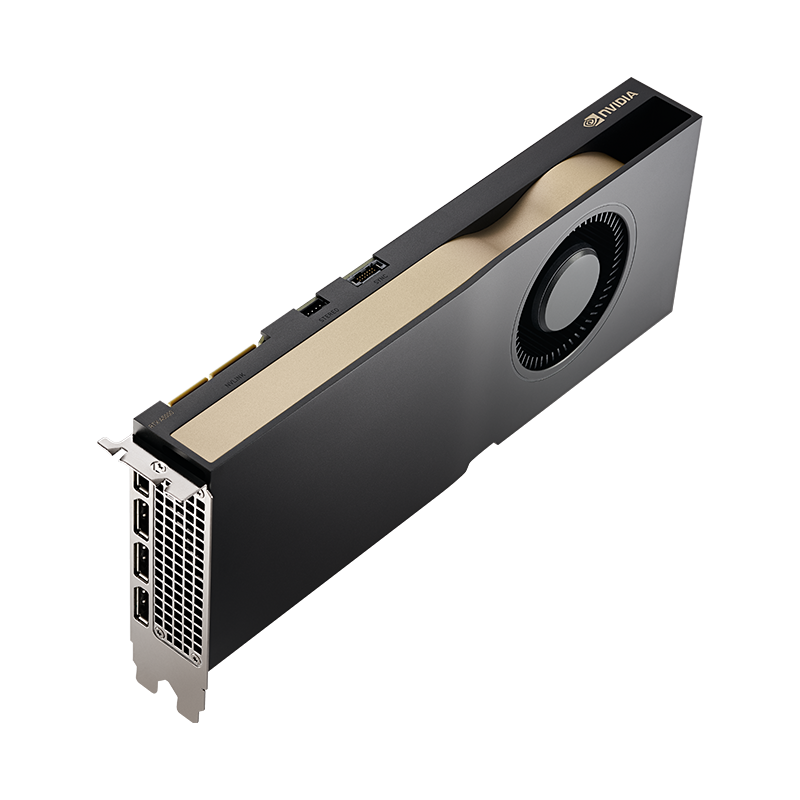
- RTX PRO 6000 Blackwell Max-Q Workstation Edition: the same 96 GB at 300 W with a blower instead of an open cooler, for stacks of three or four cards
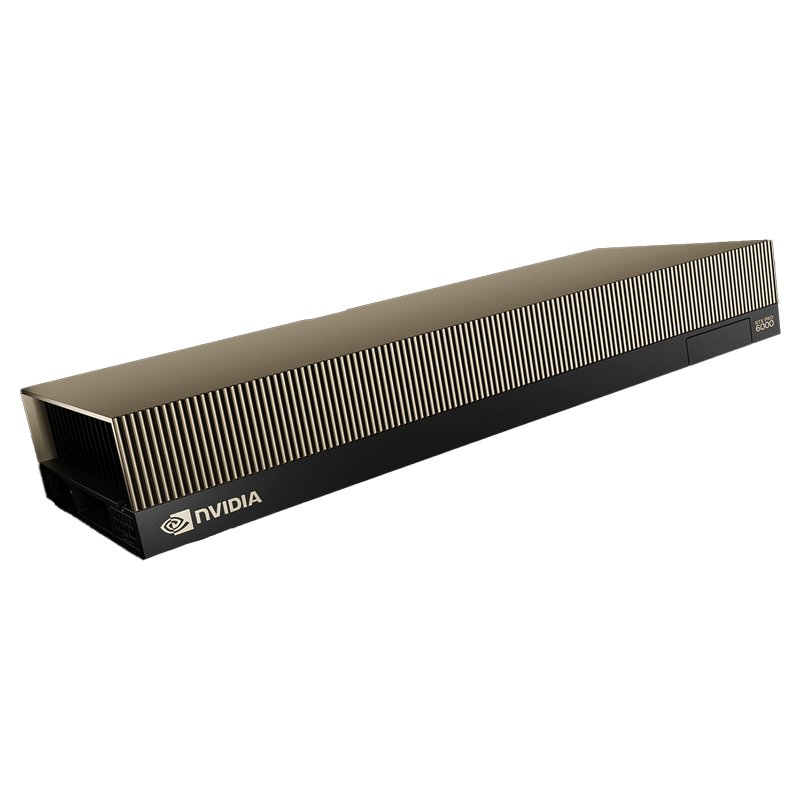
- RTX PRO 6000 Server Edition 96 GB: passive, fed by the platform cable, for servers with front to back airflow only
- Workstation Edition in OEM packaging: the same card, a different bundle
FAQ
Is a standard 16 amp outlet enough?
For one or two cards at 600 W it is: 1700 W works out to about 7.4 A at 230 V. For four cards, pull a dedicated line from the panel.
The card reports a 450 W limit instead of 600. Is it defective?
Almost certainly not. If nvidia-smi shows Max Power Limit 450, the ceiling is set in hardware and nvidia-smi -pl will not raise it: check the cable part number, then the platform configuration. If Max Power Limit reads 600, the limit was lowered in software.
Can a 600 W card be powered through a PCIe 8-pin adapter?
No. The most an adapter declares to the card under NVIDIA documentation is 300 W. You need a supply with a native 12V-2x6 cable.
One 2000 W unit or two rated 1200 W each?
One is simpler to operate and cheaper. Two are justified when the power you need is not available in a single unit.
Can a server card go into a workstation?
Technically yes, in practice it hurts. The Server Edition is passive and expects the airflow of server fans. One forum build had such a card pulling only 125 W instead of 600 because of the thermal limit, until a printed shroud and a 60 mm high static pressure fan were fitted.
These models are in our catalogue
Let us size the power for your configuration
Tell us how many cards you plan to run and in which chassis. An engineer will pick a supply with the right cables and say whether a dedicated line from the panel is needed.
Get a consultation