






|
Quantity
|
Out of stock
|
||
|
|
|||
|
|
|||
Three ways to connect two ports
A cable looks like a trifle at the end of the basket. In practice this is where a 400-gigabit link most often breaks, because the choice between three options is made at random.
- DAC, copper cable. The cheapest and most reliable option over short distances: within a rack, up to roughly three metres. Needs no power, adds minimal latency. Thick and stiff, which you feel in a dense rack.
- AOC, active optical cable. Fibre with transceivers soldered on both ends. Thin, light, reaches tens of metres. One end cannot be replaced: damage a connector and the whole cable goes.
- Transceivers plus a patch cord. The most flexible option: length changes by swapping the cord, transceivers move between devices. More expensive as parts, but repairable piece by piece.
What to check before ordering
Connector. OSFP and QSFP112 look similar and are not interchangeable. Look at what the adapter and the switch have first, then pick the cable.
Speed. A 400 Gb/s cable between 800 Gb/s ports caps the pair at 400. Speed is set by the slowest link in the chain.
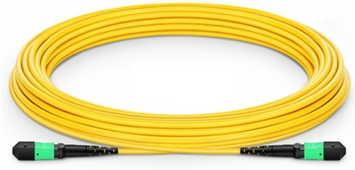
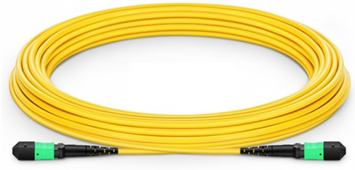
Fibre type for patch cords. Multimode (aqua jacket) for short runs, single-mode (yellow) for long ones. A transceiver is built for one of them, and they are easy to confuse.
Length with slack for routing. Cables run through managers, not in straight lines. Half a metre is the difference between barely reaching and lying properly.
Tell us what connects to what and over what distance, and we will pick a cable or a pair of transceivers that will definitely fit.