
You can produce meeting minutes with AI without handing the recording to any cloud service. A speech recognition model converts the audio into text, a second model labels who spoke and when (this is called diarisation), and a language model writes a draft listing decisions, tasks and open questions. The secretary of the meeting compares that draft with the transcript and signs it off. Everything runs on a server or workstation in your office, so recordings of board meetings and client conversations stay inside the company.
If several colleagues need to upload recordings and read transcripts in a browser, see our comparison of Scriberr and Whishper as replacements for Otter.
In brief
- The process has six steps: recording, recognition, speaker labels, a draft from the language model, a human check, and deletion of what is no longer needed.
- On Ukrainian FLEURS, the NVIDIA paper gives Whisper large-v3 a WER of 6.51% and Parakeet TDT 0.6B v3 6.79%; meeting recordings produce more errors (11.31% for Parakeet on English AMI), and no measurements on surzhyk have been published.
- A two-card RTX PRO 6000 Server Edition server keeps the assistant on the first card and recognition on a MIG slice of the second; by our estimate gpt-oss-120b serves 19 sessions of 32K tokens on a single card.
- Under Article 12 of Law No. 2297-VI, participants are told before recording starts who records, why, who receives the data and what rights they have.
Six steps from recording to approved minutes
| Step | Action | Performed by |
|---|---|---|
| 1. Recording | table microphone in the meeting room, or a video call file | meeting organiser |
| 2. Recognition | audio turned into timestamped text | Whisper or Parakeet, GPU |
| 3. Speaker labels | "speaker 1, speaker 2" for every passage | diarisation model, GPU |
| 4. Drafting | decisions, tasks, owners, deadlines | language model, GPU |
| 5. Review | draft checked against the transcript | meeting secretary |
| 6. Retention | minutes stay, audio is removed | rule agreed in advance |
Source: our description of the process; models according to their Hugging Face cards, read 25.10.2026.
If the model mixes up speakers, a task lands with the wrong person, which is why step five is done by a human.
Recording: room microphone or video call
The models in this article take 16 kHz mono audio (the Parakeet card names WAV or FLAC), and so does NVIDIA's diarisation model. Any standard conference microphone provides that; the room matters far more.
A meeting room with a single table microphone puts every voice on one channel, at varying distances, together with creaking chairs and overlapping remarks. According to the Parakeet TDT 0.6B v3 card, the share of wrong words is 11.31% on the AMI corpus (English meeting recordings) and 1.93% on LibriSpeech test-clean, which is read text. Put simply, roughly every ninth word is wrong in a meeting and every fiftieth on a clean recording. In the same card, noise as loud as the speech lifts the average error from 6.34% to 11.66%.
A video call usually sounds cleaner because each person speaks into a headset close to the mouth. If the system records each participant on a separate track, the speakers are already separated and the labelling step can be skipped, as with separate channels in a contact centre. If the conferencing system's built-in transcripts and summaries run on the vendor's servers, however, the recording ends up there whatever you do with the file later.
Place the microphone in the centre of the table, away from the projector, ask people in large meetings to give their name when they first speak, and avoid side conversations: where voices overlap, both recognition and speaker labels fail most often.
Recognising meetings in Ukrainian and Russian
As of October 2026, two open models cover most office meetings. OpenAI's Whisper large-v3 knows 99 languages; the code and weights in OpenAI's repository are MIT-licensed, and it states roughly 10 GB of video memory for its large models. Parakeet TDT 0.6B v3 from NVIDIA recognises 25 European languages, Ukrainian and Russian among them, identifies the language itself, adds punctuation and word-level timestamps, and is licensed under CC BY 4.0. One pass covers up to 24 minutes of audio with full attention on an A100 80GB, and as much as 3 hours with local attention.
| Model | WER uk, FLEURS | WER ru, FLEURS | RTFx, one A100 | Languages |
|---|---|---|---|---|
| Whisper large-v3 | 6.51% | 4.17% | 145.5 | 99 |
| Parakeet TDT 0.6B v3 | 6.79% | 5.51% | 3,333 | 25 European |
| Canary-1B v2 | 10.50% | 6.90% | 749 | 25 European |
Source: WER from the NVIDIA paper arXiv 2509.14128, read 13.11.2026; RTFx on English test sets and one A100-SXM4-80GB from the Open ASR Leaderboard paper (arXiv 2510.06961v3, 10.12.2025); languages from the Hugging Face cards, read 25.10.2026.
FLEURS consists of read sentences, so meeting-room recordings will contain more errors. We found no published measurements on surzhyk or on meetings that mix Ukrainian with Russian, so test such recordings separately. How to correct names and terms is covered in our article on recognising Ukrainian and Russian locally.
The Whisper card warns that the model performs unevenly across languages and accents and can output text that was never in the audio (hallucination). A secretary reading the transcript will spot such passages, whereas a summary built only from the transcript may carry them into the minutes.
Speed is not a constraint. RTFx is the number of seconds of audio processed per second of compute. A one-hour meeting takes Whisper large-v3 3,600 ÷ 145.5, roughly 25 seconds of GPU time, and Parakeet about one second (our calculation). Even 20 one-hour meetings a day add up to around eight minutes with Whisper.
Who said what: speaker labels and names
A diarisation model marks every passage with an anonymous label plus start and end times. NVIDIA's Nemotron 3 Diarization (23.09.2026, OpenMDW License 1.1) separates up to eight speakers according to its card, permits commercial use and shows an error rate of 11.14% in the offline profile on AMI meetings captured with one distant microphone. When more than eight people speak, pyannote community-1 (CC BY 4.0) accepts a lower and an upper bound for the speaker count; see our article on diarisation on your own server. The pyannote card gives no DER for Ukrainian or Russian.
The secretary assigns names to the labels by hand from the attendance list. The other route, matching voices against stored samples, may count as processing biometric data, which Article 7 of Law No. 2297-VI places among the special categories.
How the language model drafts the minutes
The language model reads the labelled transcript and fills in a fixed template: date, participants, agenda, decisions, tasks with owner and deadline, open questions. For every decision and task the template asks for a timestamp, so the secretary can jump straight to the right point in the transcript.
For German, a published measurement gives 1.76 tokens per word, so 8,000 spoken words come to about 14,100 tokens. We found no such measurement for Ukrainian with the gpt-oss tokenizer, so count the tokens on one of your own transcripts. There is plenty of headroom. Its configuration file gives gpt-oss-120b, the open OpenAI model licensed under Apache 2.0, a context of 131,072 tokens, and in the German example a 32,768-token session holds an hour of transcript, the template and the draft.
For each generated token gpt-oss-120b reads about 5 GB of weights, so an RTX PRO 6000 Server Edition, whose memory delivers 1,597 GB/s, produces up to 320 tokens/s for a single request (an upper bound by our estimate).
The template records decisions in the wording used at the meeting, and anything the model cannot attribute to a person (a task with no owner, say) goes into the open questions.
Which server you need and how many meetings it handles
Minutes are seldom the only workload, so the same server usually also runs the company chat assistant, document search and translation.
| Setup with RTX PRO 6000 | Task split | Capacity, our estimate | Power, our estimate |
|---|---|---|---|
| Workstation with two Max-Q | first card: assistant plus minutes; second: speech, speaker labels, search | 19 × 32K sessions on the first card | approx. 1.1 kW |
| Server with two Server Edition | first card: assistant plus minutes; second: four MIG instances | 19 × 32K sessions on the first card | approx. 1.8 kW |
| Server with four Server Edition | same split, plus a card per further department | 19 per card, each card with its own model copy | approx. 3.4 kW (2.7 kW with cards capped at 450 W) |
Source: typical configurations built for the task; sessions by our rule for gpt-oss-120b (60.8 GiB of weights, 1.125 GiB of 16-bit cache per 32,768-token session); power by our estimate (cards and processors plus 15% for the rest of the system), to be confirmed by measuring the finished system.
One card for minutes only. By our estimate the smallest step is a workstation with a single RTX PRO 4500 Blackwell (32 GB, 200 W). Our rule leaves 25.7 GiB usable; Whisper turbo needs roughly 5.6 GiB and gpt-oss-20b 12.8 GiB, and the remaining 7.3 GiB fits nine simultaneous 32K-token drafts. An ordinary office socket powers it.
Two cards in a server. Our rule takes 90% of the 95.6 GiB the driver reports for an RTX PRO 6000 Server Edition, minus 3 GiB per card and minus the model weights. After gpt-oss-120b, 22.2 GiB remain on the first card, which means 19 concurrent sessions. MIG splits the second card into four isolated 24 GB instances: Whisper or Parakeet in the first, the diarisation model (a 397 MB file) in the second, search models in the third and tests in the fourth (see our article on MIG and vGPU). The server draws about 1.8 kW and fits on a 230 V, 16 A circuit, which carries 2.94 kW at 80% load. It belongs in a server room, and given power cuts in Ukraine the supply is planned with a UPS and a generator.
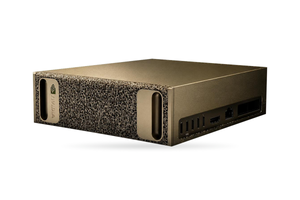
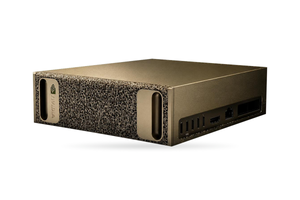
Two cards in a workstation. Without a server room, a workstation with two RTX PRO 6000 Blackwell Max-Q cards at 300 W each will do: about 1.1 kW from a normal 230 V socket, preferably in a separate room. ETE builds such workstations and servers for the task and sizes the configuration from your number of meetings, languages and users.
The IT team should run recognition, diarisation and the language model as separate services behind an LLM gateway with keys and a request log (--api-key in vLLM 0.32.0 protects only some paths), confirm that no component sends audio to the cloud, and implement retention rules as scheduled jobs.
Recording meetings under Law No. 2297-VI: whom to inform and about what
A voice and a recorded conversation are personal data, so a meeting recording falls under Law No. 2297-VI, and your own server does not remove those obligations. Ukraine has no dedicated law on recording by commercial companies, so general rules apply, among them Article 32 of the Constitution, which prohibits collecting confidential information about a person without their consent, except where the law provides otherwise.
Legal basis and notice. Article 11 of Law No. 2297-VI lists six grounds for processing, including consent, contract and legitimate interest; your lawyer decides which applies. Under Article 12 the person is told who the controller is, what data is collected, for what purpose, who receives it and what rights they have. For a recurring meeting, a line in the calendar invite plus a spoken sentence when the meeting opens is enough; guests from other companies are informed too, and recording begins only when nobody objects. Article 29 of the Labour Code requires employers to acquaint staff with working conditions against signature, so a standing practice of recording meetings should be set out in an internal policy.
No emotion analysis. Ukraine has no dedicated AI law yet. In the EU, Article 5(1)(f) of the EU AI Act has prohibited inferring a person's emotions in the workplace since 02.02.2025 (with medical and safety exceptions); for a Ukrainian company this matters if the system or its output is used in the EU.
Voice samples. If voices are matched against samples, treat this as biometrics: such data may be processed only under the exceptions in Part 2 of Article 7, for example with unambiguous consent. The Ukrainian Parliament Commissioner for Human Rights treats biometrics as processing of special risk, which must be notified to the Commissioner within 30 working days (Art. 9).
This section is general information as of November 2026 and is not legal advice.
How long to keep audio, transcript and minutes
Recordings of conversations are kept only as long as their purpose requires. For minutes this usually means three different periods.
| Item | Example rule | Reason |
|---|---|---|
| Audio | removed after the minutes are approved | holds each voice and each side remark |
| Transcript | removed after a brief review window | only used to verify the draft |
| Approved minutes | retained as a company record | the document people work from |
Source: illustrative example; the periods for your company are set by your lawyer in line with the purpose of processing under Law No. 2297-VI.
A person may demand that their data be destroyed (Art. 8), and on a minutes server it sits in the audio and transcript stores, the search index, the assistant's chat history and the backups. Deletion is configured as an automatic job while the system is being built, and recordings stay out of the general document search.
FAQ
Can AI write meeting minutes without the cloud?
Yes. Speech recognition, a speaker labelling model and a language model such as gpt-oss-120b run on a server in your company, so the recording and transcript never reach an outside provider. A person approves the draft.
How accurately does AI recognise meetings in Ukrainian?
On Ukrainian FLEURS the NVIDIA paper reports a WER of 6.51% for Whisper large-v3 and 6.79% for Parakeet TDT 0.6B v3. These are read sentences; on English AMI meetings Parakeet gets 11.31% of words wrong. There is no data for surzhyk, so start with a few of your own recordings.
Do participants have to consent to a meeting being recorded?
Consent is only one of the six grounds in Article 11 of Law No. 2297-VI. Notice under Article 12 is mandatory: people are told in advance who records, why and what rights they have, and in practice recording does not start if anyone objects.
Can AI tell who said what in a meeting?
Diarisation tags each passage with a label such as "speaker 1" or "speaker 2"; Nemotron 3 Diarization separates up to eight speakers. The secretary adds names from the attendance list, because matching voices against samples may count as processing biometric data.
Which server do we need for meeting minutes?
A two-card RTX PRO 6000 Server Edition server keeps the assistant and minutes on one card and recognition on a MIG slice of the other; a one-hour meeting needs about 25 seconds of GPU time. For minutes alone, by our estimate, a single RTX PRO 4500 32 GB in a workstation is enough.
How long should meeting recordings be kept?
No longer than the purpose requires: remove the audio after approval, hold the transcript briefly and store the minutes as a company document. Your lawyer sets the exact periods.
What ETE supplies for this
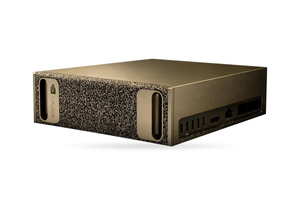
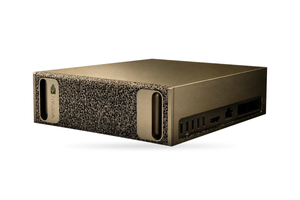
- ETE AI Workstation: a workstation with a 96 GB RTX PRO 6000 that expands to two Max-Q cards for the "assistant on one card, speech on the other" layout.
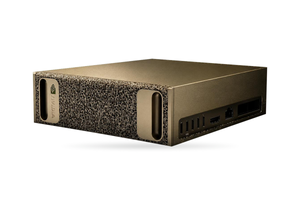
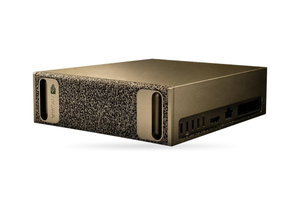
- ETE AI Server RTX PRO: four RTX PRO 6000 Server Edition cards (384 GB of video memory) and 768 GB of DDR5 ECC in 4U; by our estimate 19 gpt-oss-120b sessions per card for minutes, the assistant and other departments.
- NVIDIA RTX PRO 6000 Server Edition 96 GB: the card MIG splits into four 24 GB instances.
- NVIDIA RTX PRO 4500 Blackwell 32 GB: the smallest step for a minutes-only workstation: Whisper turbo, gpt-oss-20b and nine simultaneous 32K-token drafts.
Need a server for meeting minutes?
Tell us how many meetings a week you record, which languages participants speak, how you record today and who else will use the assistant on the same server. ETE will size the configuration and, where needed, Vixen.UNO engineers will set up recognition, the minutes template and automatic deletion.